CIC
"AI+" Integration Across Construction Lifecycle for Improving Compliance Efficiency

"AI+" Integration Across Construction Lifecycle for Improving Compliance Efficiency

Over the past year, the Hong Kong construction industry has faced severe challenges, including persistently high costs, shortage of skilled workers, and economic volatility. In addition, multiple industrial accidents have affected public confidence in the industry. It is hoped that in 2026, everyone in the industry will turn grief and indignation into strength, transform adversity into an opportunity for self-reform, and demonstrate through action the determination of more than 400,000 practitioners to uphold professional integrity. Our original aspiration to build quality homes and quality communities for the people of Hong Kong remains unchanged.


The CIC Fully Supports On-site Sampling and Inspection of Scaffold Nets

Following the No. 5 alarm fire in Tai Po, the CIC swiftly took action to support the industry. To alleviate the financial pressure on workers affected by the temporary suspension of works, the number of training places for tuition-free training with an allowance under the Multi-Skilled training courses at the Hong Kong Institute of Construction (HKIC) has been increased to 5,000, enabling workers to make good use of their time and acquire an additional skill for their future livelihood.


The CIC is also assisting contractors in a smooth transition to the Government's latest requirements regarding fire retardant protective netting. The CIC is taking the lead in the one-off collective procurement of external wall scaffolding nets, manufacturers will be requested to produce scaffolding nets that comply to the standards, facilitating the industry's purchase of materials that meet fire retardant standards. Furthermore, the CIC is introducing a labelling system to facilitate tracking of the supply chain and the flow of materials, with the aim of restoring public confidence in site safety. The CIC also understands that contractors affected by the replacement of scaffolding nets may face financial pressure, and will provide appropriate support on a case-by-case basis to assist them in completing repair works as soon as possible.


The CIC previously announced that its “Committee on Repair, Maintenance, Alteration and Addition” will conduct a comprehensive review and enhance safety and professional training to improve industry standards, and call on private-sector projects to immediately adopt relevant systems, such as the Registered Specialist Trade Contractors Scheme. I will lead the Committee to assist the industry in raising professional standards in safety, management, work experience, construction, finance, and integrity, and to build a group of reliable and accountable contractors.


"Prevention is better than cure". The new system takes a preventive approach and is set to significantly reduce the possibility of those who disregard the law exploiting loopholes. Safety is priceless; spot checks and testing before works commence are far more effective in protecting residents and workers than pursuing accountability afterwards. This institutional reform deserves our full support.


Use AI Wisely to Strengthen Project Safety

"Repair, Maintenance, Alteration and Addition" (RMAA) works are characterised by their smaller scale, short duration, smaller workspaces relative to construction sites, and dispersed locations. These factors often lead to an underestimation of risk, overlooking the fact that RMAA involves high-risk procedures such as scaffolding and welding. The Smart Site Safety System (4S) can be used with AI and Internet of Things (IoT) sensors to provide continuous site monitoring, scenario analysis, and risk pre-warning capabilities.


The CIC has designated 2026 as the "Year of AI". Artificial Intelligence (AI) can help speed up work, improve efficiency, and establish automated workflows. This year, the CIC will launch more relevant courses and activities to enhance practitioners' confidence and skills in using AI, promoting the seamless integration of AI with the full construction lifecycle, so that AI can truly be put into practice, particularly within RMAA projects.


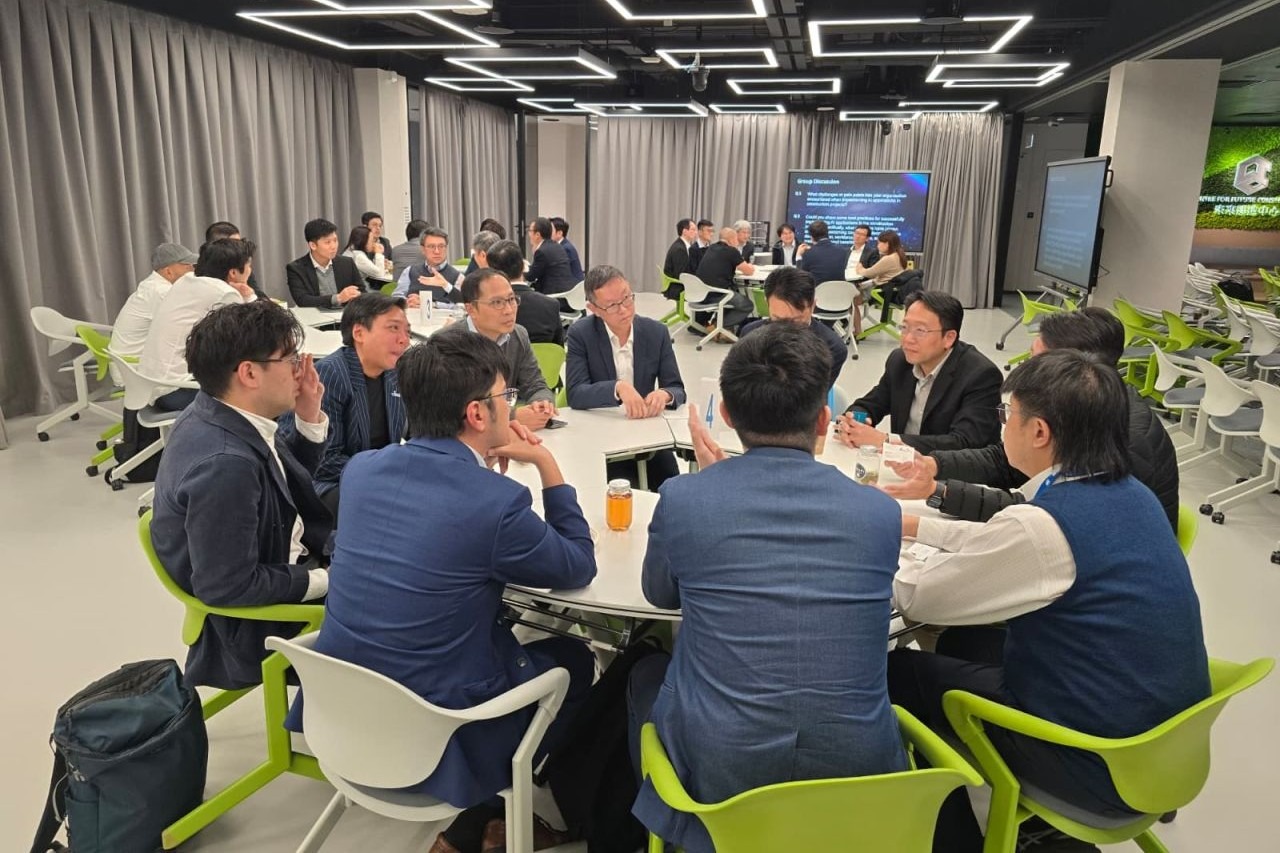
The CIC also organises and participates in numerous exchange activities that promote the industry's practical application of AI. Earlier, I attended an international conference on digital construction and AI, NCTI-DCHK Conference 2025, hosted by The University of Hong Kong, where I shared how the Northern Metropolis can serve as an innovative ecosystem for piloting AI, robotics, and sustainable construction for the industry. Furthermore, the CIC regularly hosts AI Salons, bringing industry practitioners together for exchange and collaboration. The most recent session featured Ir Felix POON, Chief Assistant Secretary (Works) of the Project Strategy and Governance Office, Development Bureau, and Ir C.K. NG, Chief Executive Officer of dRoW Limited, who shared how AI is transforming digital project delivery in the construction industry. The next CIC Master Talk on Harnessing the Power of AI for the Construction Industry is scheduled for 22 January 2026. It will present multiple practical AI case studies, aiming to inspire attendees to reflect on how to integrate AI into their own projects. Construction professionals should not miss this opportunity!

The Hong Kong Institute of Construction (HKIC), under the CIC, also offers various RMAA and 4S courses. Taking the "Professional Certificate in Smart Site Safety System Planning and Implementation" as an example, the course is taught by HKIC lecturers and industry professionals. Upon completion, participants will be capable of analysing actual site conditions and understanding the key equipment of 4S and the requirements of public works contracts, thereby formulating a precise implementation plan. I appeal to all practitioners to enrol in these courses to establish an additional line of defence for construction safety.


Launch of the "CIC AI Assistant (Construction Safety)" Beta Version

The "CIC AI Assistant (Construction Safety)" chatbot, developed by the CIC, has been launched. This artificial intelligence tool is tailored for the Hong Kong construction industry, designed to assist site safety officers, supervisors, and engineers in managing risks and supporting decision making. The chatbot is available round the clock to provide immediate responses to user enquiries. Its answers are generated based on over 3,000 construction safety related documents from government departments, statutory bodies, and industry organisations. Responses include links to the original text for quick reference to the full document. Furthermore, users may upload images to request risk analysis advice from the system.


The CIC AI Assistant utilises Large Language Models (LLM) and "Retrieval Augmented Generation" (RAG) technology. By integrating information retrieval systems with LLM capabilities, RAG first queries a continuously updated database before generating responses, significantly enhancing the accuracy of the information provided and mitigating errors. The system is currently in its beta public testing phase. Our aim is to solicit user feedback to rectify minor issues and optimise user experience prior to the official launch. The interface features “like” and “comment” functions, and every piece of feedback contributes to quality improvement. A free usage quota is available for CIC OnePass users, and 230 companies are currently piloting the system. We invite all practitioners to trial the tool and provide their feedback immediately.


In addition, the Hong Kong Institute of Construction will launch its "CIC Master Class on AI for Construction (including LLM)" in the latter part of this month. This course is designed specifically for the construction industry, and practitioners intending to apply LLMs in their work should not miss it.


Introduction of the "CIC AI Award"

This year, the CIC will host the newly established "CIC AI Award". The initiative aims to encourage the widespread adoption of AI within the industry to enhance site safety and productivity, support the development and trial use of innovative AI technologies and application solutions, and foster cross-sector collaboration between the construction and information technology industries. The competition is primarily divided into two major streams, "AI Adoption" and "AI Research and Development". These are further divided into 12 sub-categories, encouraging the utilisation of an "AI+" mindset throughout the entire construction lifecycle. To facilitate knowledge exchange and lower the entry barrier to learning new technologies, technical seminars and sharing sessions featuring award-winning cases will be organised. Full details will be announced shortly. Please stay tuned and register to take part.


"Future Construction Excellence Programme" Participants Visit CLP’s AI-Empowered Monitoring Facilities

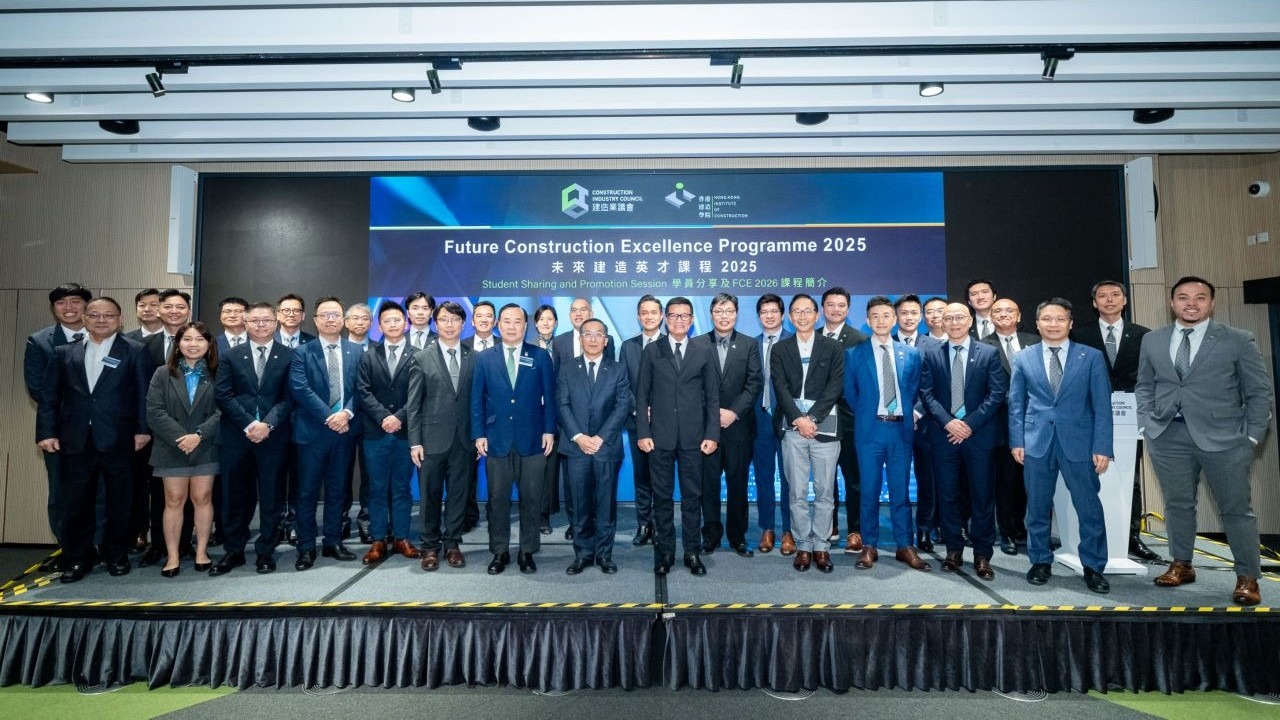
Participants in the "Future Construction Excellence Programme" recently completed the "Local Expertise Module", successfully completing the programme. The cohort first visited the CIC’s Centre for Future Construction, and then visited CLP’s Black Point Power Station to learn about CLP’s commitment to site safety and to observe the AI-enabled monitoring system Grid-V and GBG Data Analytics Hub, which help ensure power supply reliability and system resilience.


On that day, I reminded the participants to keep the principles of "Safety First" and "Resilience by Design" at the forefront, to manage construction risks effectively, and to make good use of technology to create smarter worksites. During the presentation session for the "Hostels in the City Scheme", I saw participants propose AI-driven solutions to optimise occupancy and strengthen safety management. I am convinced that the industry has no shortage of talent capable of harnessing AI. I hope they will apply what they have learned, build on it with AI, and bring it into practice, leading the industry to explore new frontiers with confidence.

CIC Jiangsu Study Tour Visits XCMG Group to Explore New Engineering Machinery Technologies

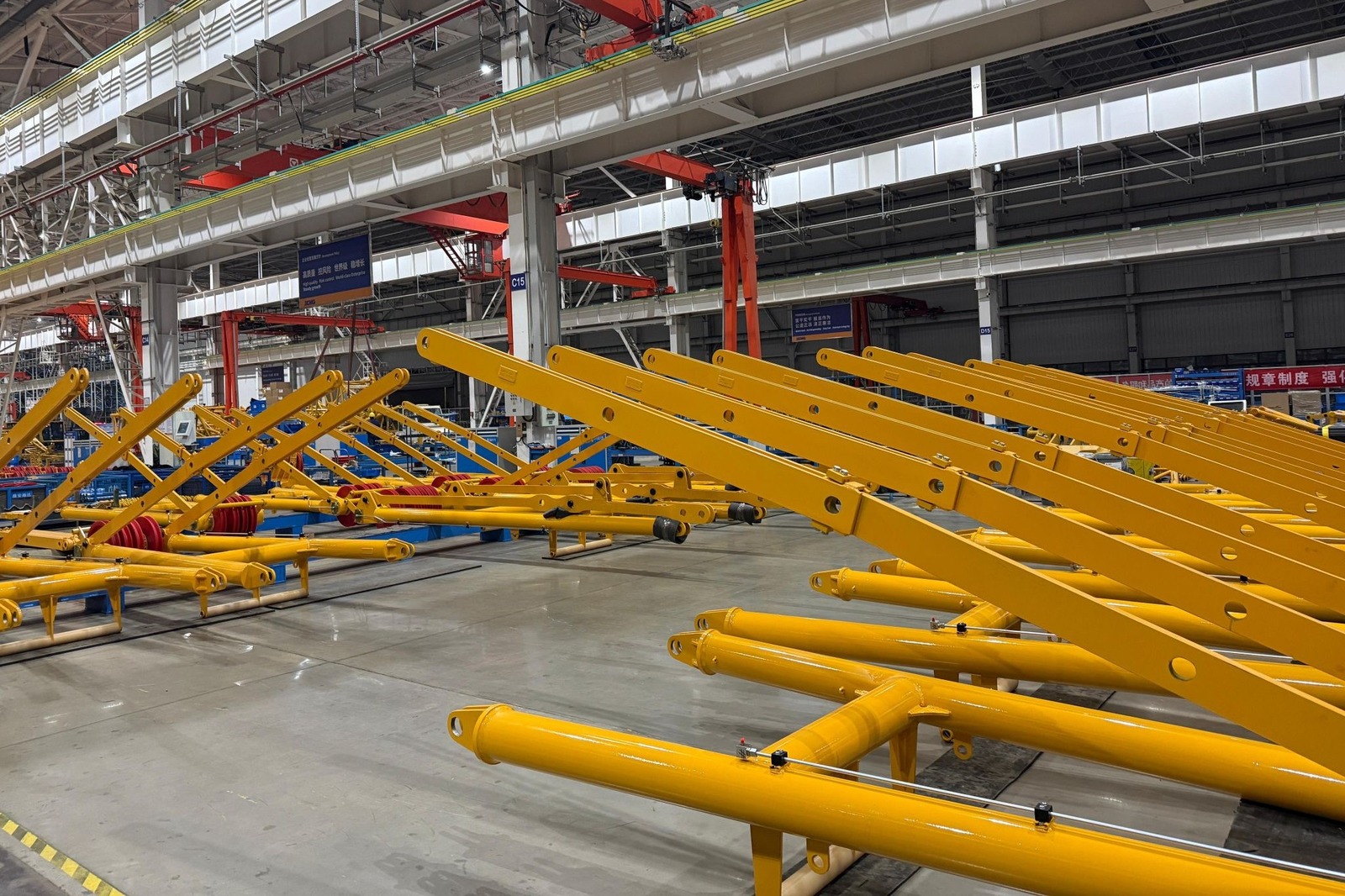
Last month, I joined industry representatives on a study visit to Jiangsu to explore the latest trends in smart construction, underground space development, and green building. The delegation visited XCMG Group, with a focus on how 5G/6G, big data, and AI are being integrated into engineering machinery technology. We saw the power of mega machines, including smart drill-and-blast construction robots and a 4,000-tonne crawler crane. These machines have already been successfully deployed in multiple major infrastructure projects in China and overseas, highlighting the leading position of China-made engineering machinery on the global stage.

The year 2026 marks a new starting point for the deepening of reforms within the Hong Kong construction industry, with artificial intelligence (AI) serving as an indispensable tool in this transformative journey. The CIC will be committed to promoting the adoption of AI across the sector by integrating professional integrity, innovative thinking, and the spirit of craftsmanship as we move towards a bright future.

Ir Prof. HO On-sing, Thomas
Chairman
02.01.2026

Last Updated: 2026-01-02 12:19:48